
Find the Right Surfboard: Which Board Suits You?
ai generated
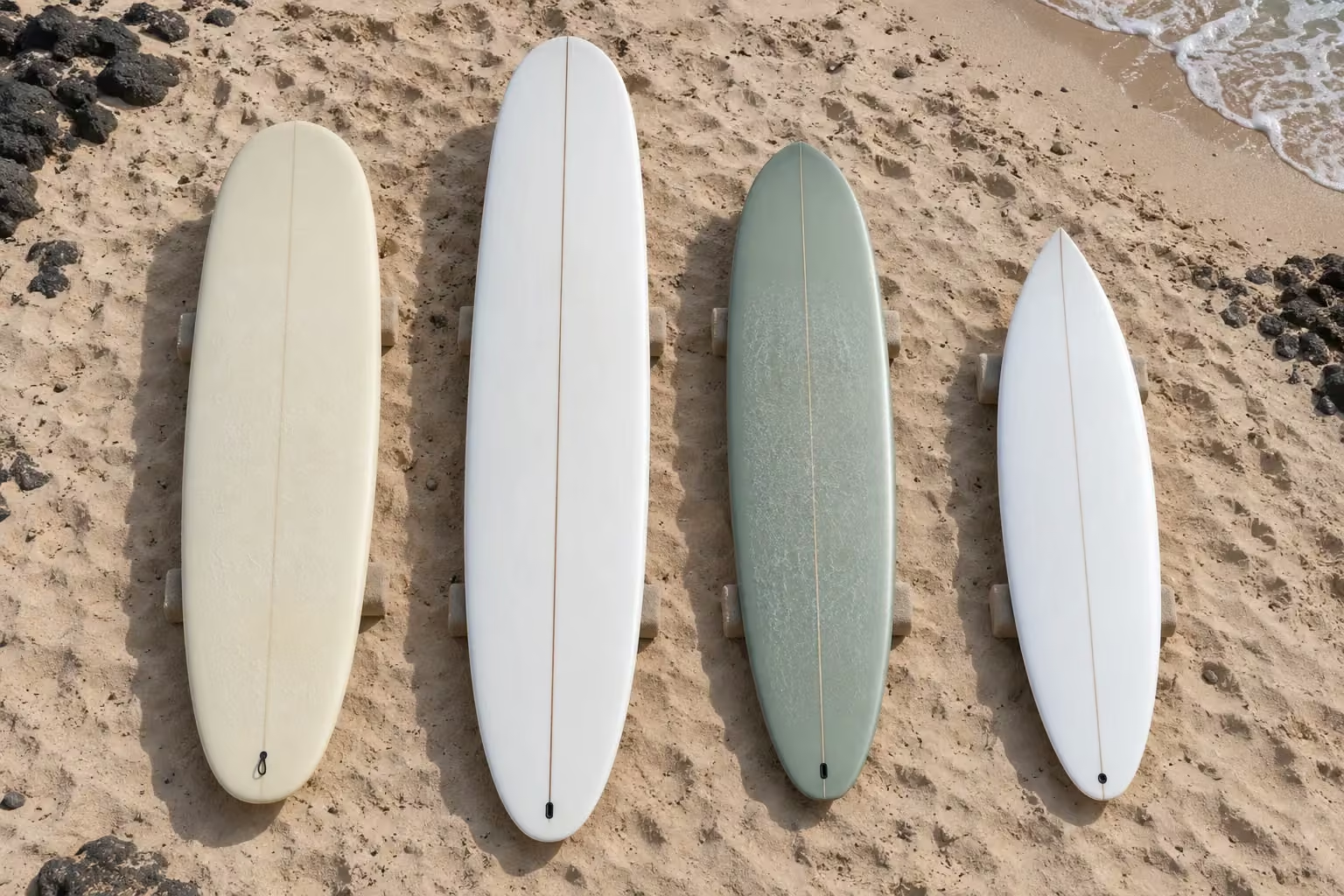
You're standing in front of a row of surfboards. Some are long and wide, others short and narrow. Some have a soft surface; others look like experienced surfers' boards.
Now what? Which one is right for you?
The right surfboard depends mainly on your surf level, body weight and the waves you want to ride.
Especially when learning to surf , board choice makes a big difference. A board that floats you well, feels stable and catches waves easily usually helps more than a high-performance model.
What types of surfboard are there?
Surfboards differ in length, width, shape, volume and construction. These features help determine how easily you paddle, catch waves and control the board.
ai generated
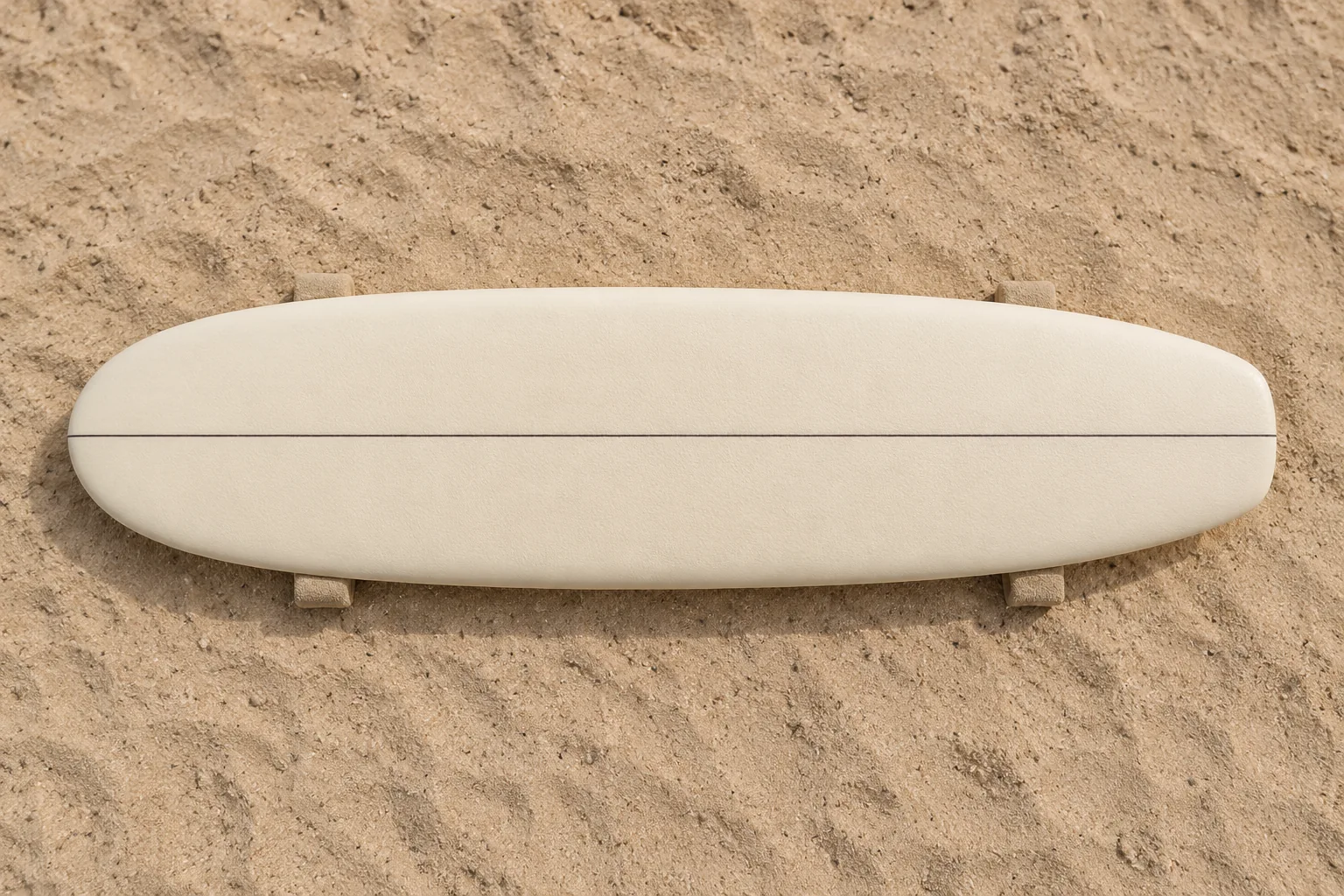
Softboard – Ideal for starting out
Softboards have a softer surface and are often wide and buoyant. This makes paddling easier and provides a stable base for the Take-off.
Suitable for: first surf lessons, beginners and basic exercises.
ai generated
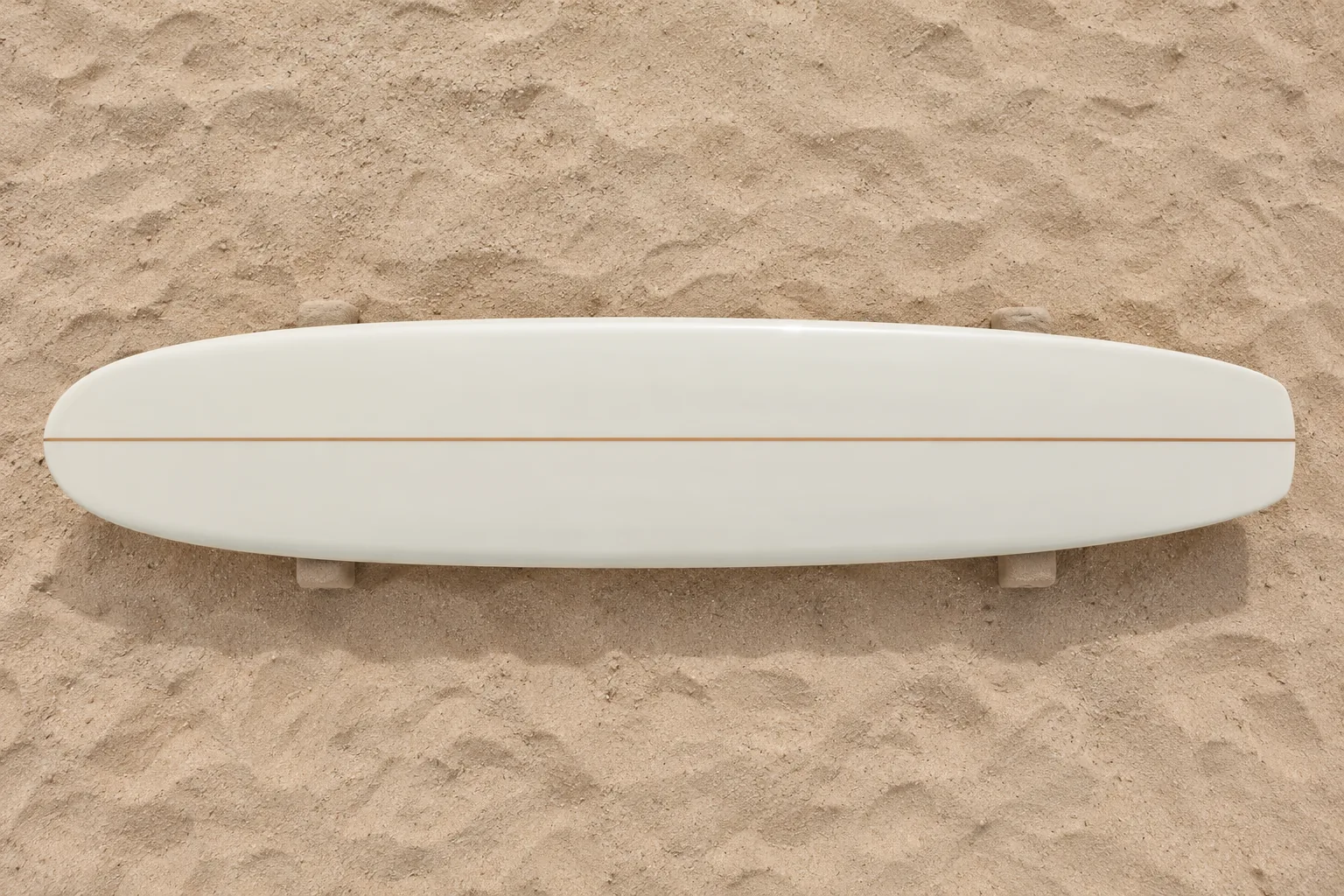
Longboard – Smooth gliding
Longboards are usually at least 9 feet (about 274 cm) long. They offer plenty of planing surface and can catch waves early, but their length makes them less manoeuvrable to handle.
Suitable for: surfers who enjoy long, flowing rides.
ai generated
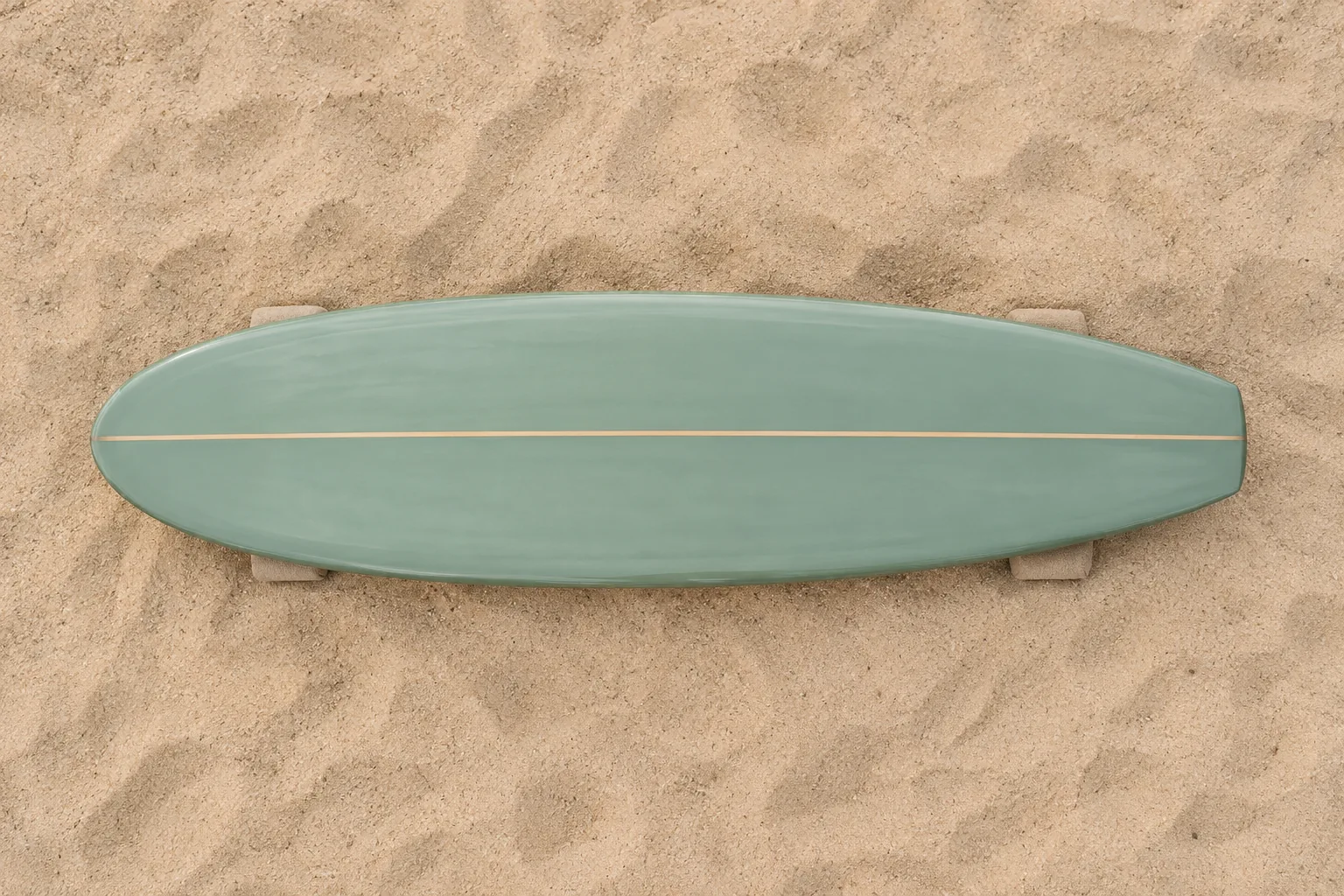
Mini-malibu and funboard – Versatile all-rounders
These boards often sit between longboards and shortboards. They combine a generous standing area with greater manoeuvrability.
Suitable for: progressing beginners and surfers looking for a versatile board.
ai generated
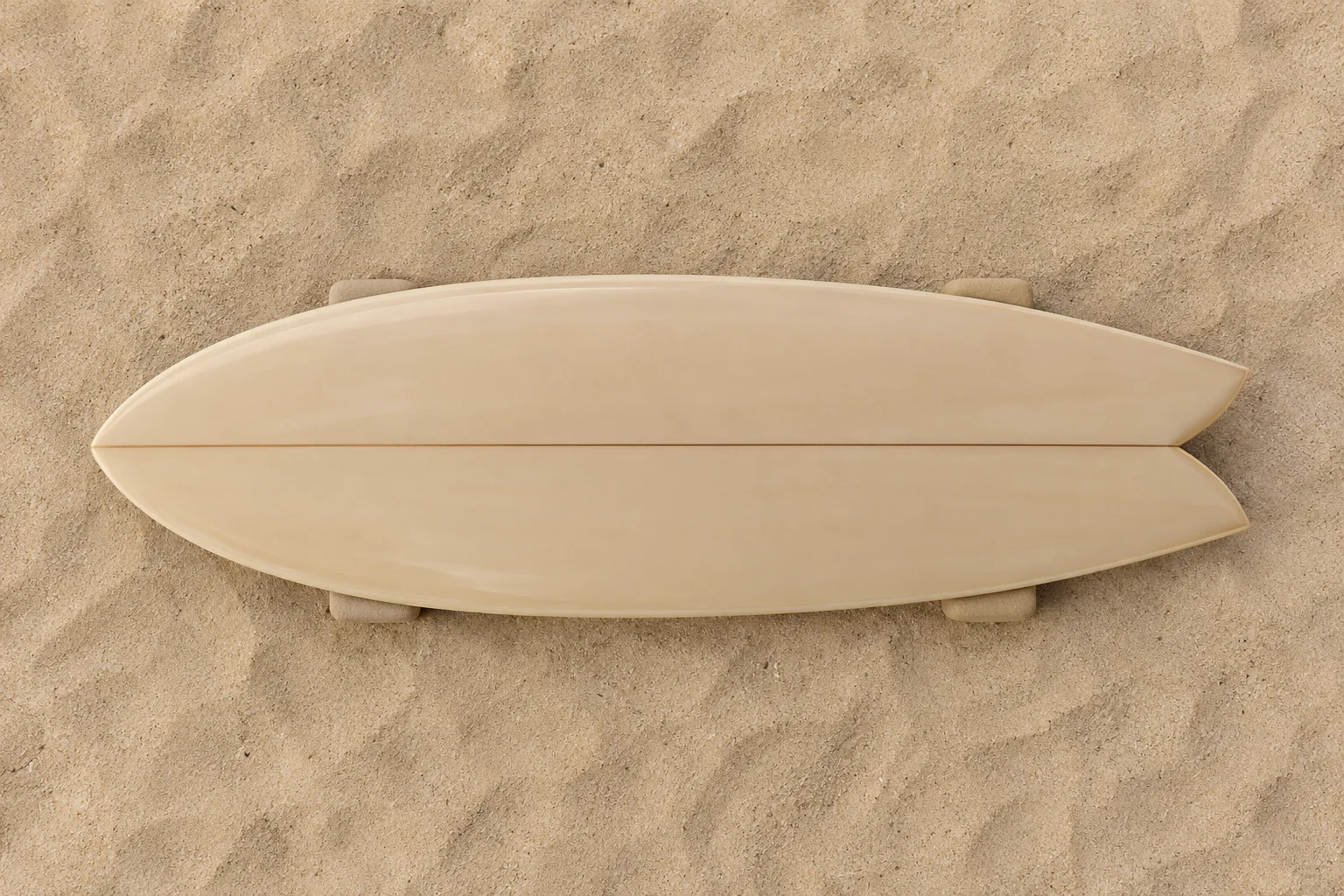
Fish – Compact and easy-gliding
Fish boards are usually shorter, but relatively wide and buoyant. Their split swallow tail is typical. Depending on the shape, they already require good board control.
Suitable for: experienced surfers, particularly in suitable small to medium waves.
ai generated
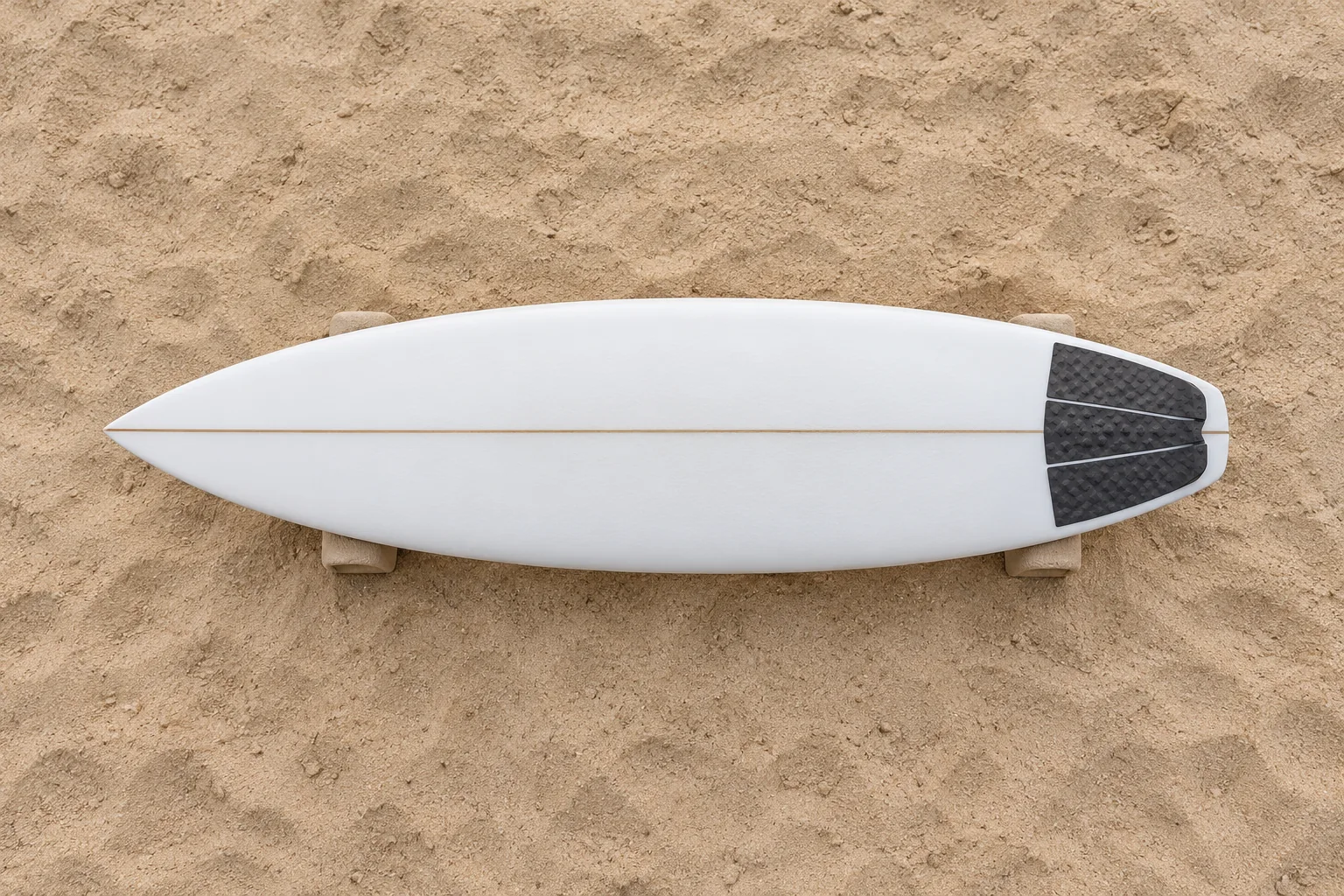
Shortboard – For dynamic surfing
Shortboards are usually shorter, narrower and lower in volume. They allow quick direction changes, but make paddling, catching waves and take-offs more demanding.
Suitable for: more experienced surfers with a reliable Take-off and good wave knowledge.
The categories overlap: softboard describes construction, while longboard or fish mainly describes shape. That is why softboard longboards exist too.
Length, width and volume: what matters?
Three features are particularly useful for comparing surfboards.
| Feature | What it affects |
|---|---|
| Length | Longer boards often make early wave entry easier, but need more space during manoeuvres. |
| Width | Wider boards usually provide a larger, more stable standing area. |
| Volume | More volume means more buoyancy and often makes paddling and catching waves easier. |
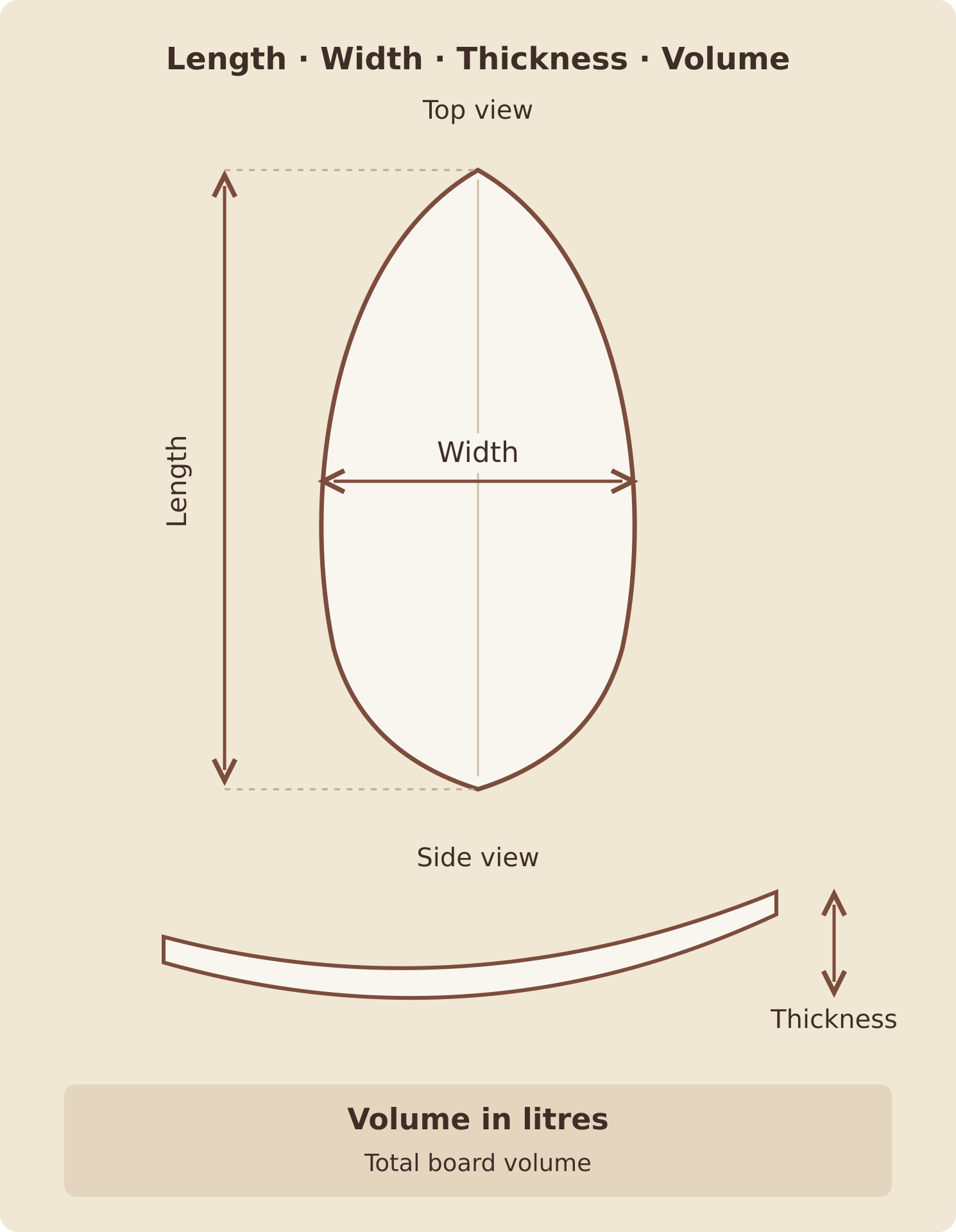
Length alone does not determine how a board rides. Width, thickness, volume and shape also affect buoyancy, stability and manoeuvrability.
Length is usually given in feet and inches. An 8'0" board, for example, is around 244 cm long. Volume is measured in litres.
Important: litres alone do not tell you how stable a surfboard is. Width, thickness and volume distribution matter too.
Remember: for your first attempts, enough buoyancy usually matters more than having a short board.
Which surfboard suits your level?
What matters is what you can do confidently in the water, rather than how long you have surfed.
A board to consider
A large softboard
You are learning to paddle, catch waves and stand up. A wide, high-volume softboard gives you a stable foundation.
This guidance does not replace individual board advice. Your weight, mobility and surf conditions affect the right board size.
A board to consider
A large softboard
You are learning to paddle, catch waves and stand up. A wide, high-volume softboard gives you a stable foundation.
A board to consider
A stable softboard with enough volume
You can already stand up and are learning to control your board more deliberately. A wide softboard gives you time to work on foot placement, balance and your first changes of direction. Being able to take off in the whitewater does not mean you need a smaller board yet.
A board to consider
A high-volume mini-malibu, funboard or midlength to try
You are starting to paddle into unbroken waves independently and ride along the wave face. If you can stand up with control and handle your board safely, you can try a mini-malibu, funboard or midlength with enough volume. A suitable softboard can also help you progress. Choose a small, clear next step with your surf coach.
A board to consider
A board that suits your waves and surfing style
You can explore different shapes: a longboard for flowing rides, a midlength as a versatile option, or a suitable fish or shortboard for a different feel. What matters is your ability, your weight and the waves you actually surf. A shorter board is not a compulsory next step.
When should you switch to a smaller surfboard?
Are you standing up regularly on your softboard and want to try something smaller?
That can make sense. But a few successful take-offs alone are not a reason to switch.
Ask yourself first:
- Do you regularly catch suitable waves?
- Is your take-off usually controlled?
- Can you deliberately influence your direction?
- Can you handle different waves that suit your level?
If you are still practising these skills, your current board may remain the better choice.
A smaller board with less volume often means more paddling, fewer waves and harder take-offs.
Our tip: change gradually. A slightly shorter board that still has enough volume can make the transition easier.
Buy a surfboard or rent first?
When you are starting to surf, you don't need to buy your own board straight away.
With a rental board or the board from your surf lesson , you can try different sizes and find out what suits you.
Consider four questions:
- How easily can I paddle it?
- How often do I catch suitable waves?
- How stable do I feel when standing up?
- Can I control and handle the board safely?
The board that helps you ride the most controlled waves often suits your current ability better than the higher-performance model.
Three common board-choice mistakes
1. Choosing only by appearance
A narrow shortboard may look sporty. If you can hardly catch waves on it, it won't help you learn much.
2. Choosing too little volume
Too little buoyancy can make paddling and catching waves unnecessarily difficult. Especially at the start, you usually benefit from a board that supports you well.
3. Switching too soon to a more demanding board
A shorter board doesn't automatically mean more progress. What matters is how well you control catching and riding waves.
Frequently asked questions about board choice
Which surfboard is best for beginners?
A large, wide softboard with enough volume usually suits your first attempts. It makes paddling, catching waves and standing up easier.
What surfboard length do I need as a beginner?
This depends on body weight, height and surf conditions, among other factors. Many beginners learn on softboards around 8 feet long; some need longer or shorter models. Get an individual recommendation.
Is a longboard easier to surf than a shortboard?
A buoyant longboard often helps with paddling and early wave entry. But it is longer, less handy and not easier to control in every situation.
Which matters more: surfboard length or volume?
Both matter. Volume affects buoyancy, while length, width and shape determine glide and control. No single number is enough to choose a board.
When should I switch from a softboard to a hardboard?
When you regularly catch waves, stand up with control and steer safely, you can try other constructions. Switching is optional and should suit your ability and conditions.
The right surfboard helps you surf more waves
There is no single perfect surfboard for everyone.
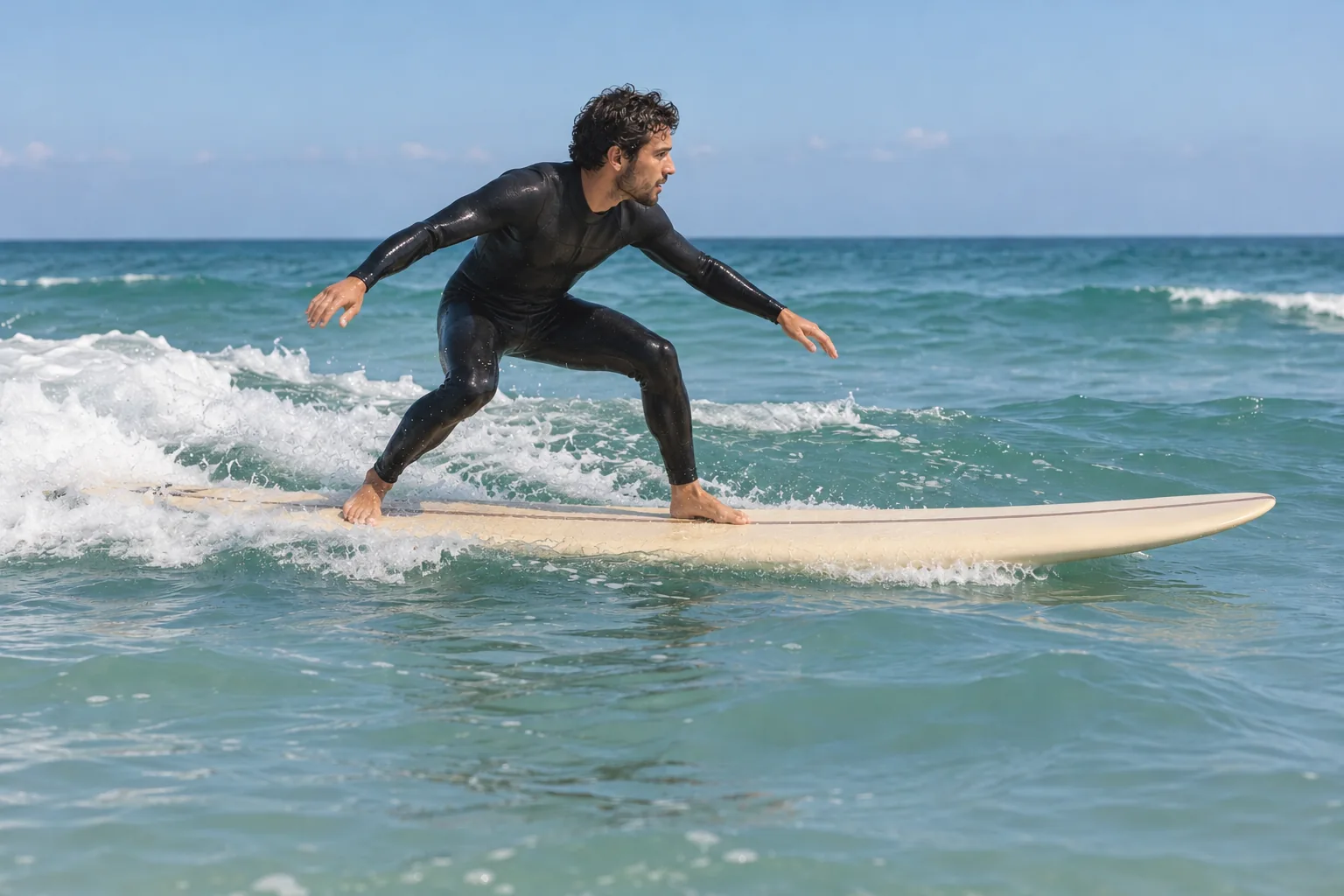
Especially at the start, stability and buoyancy deserve more weight than manoeuvrability. Every wave you ride with control is another chance to learn.
ai generated
At some point, you may realise you feel increasingly confident on your current board and are ready to try something new.
Until then: the best surfboard is the one that gives you enjoyment and progress in the water, regardless of how impressive it looks on the beach.
Find a board that suits your next step
Want to find out in the water which board supports your learning? Tell Julian about your level and goals. In personal coaching, you can explore which board suits you and the current conditions.