
Understand the Take-off: How to Stand Up on a Surfboard
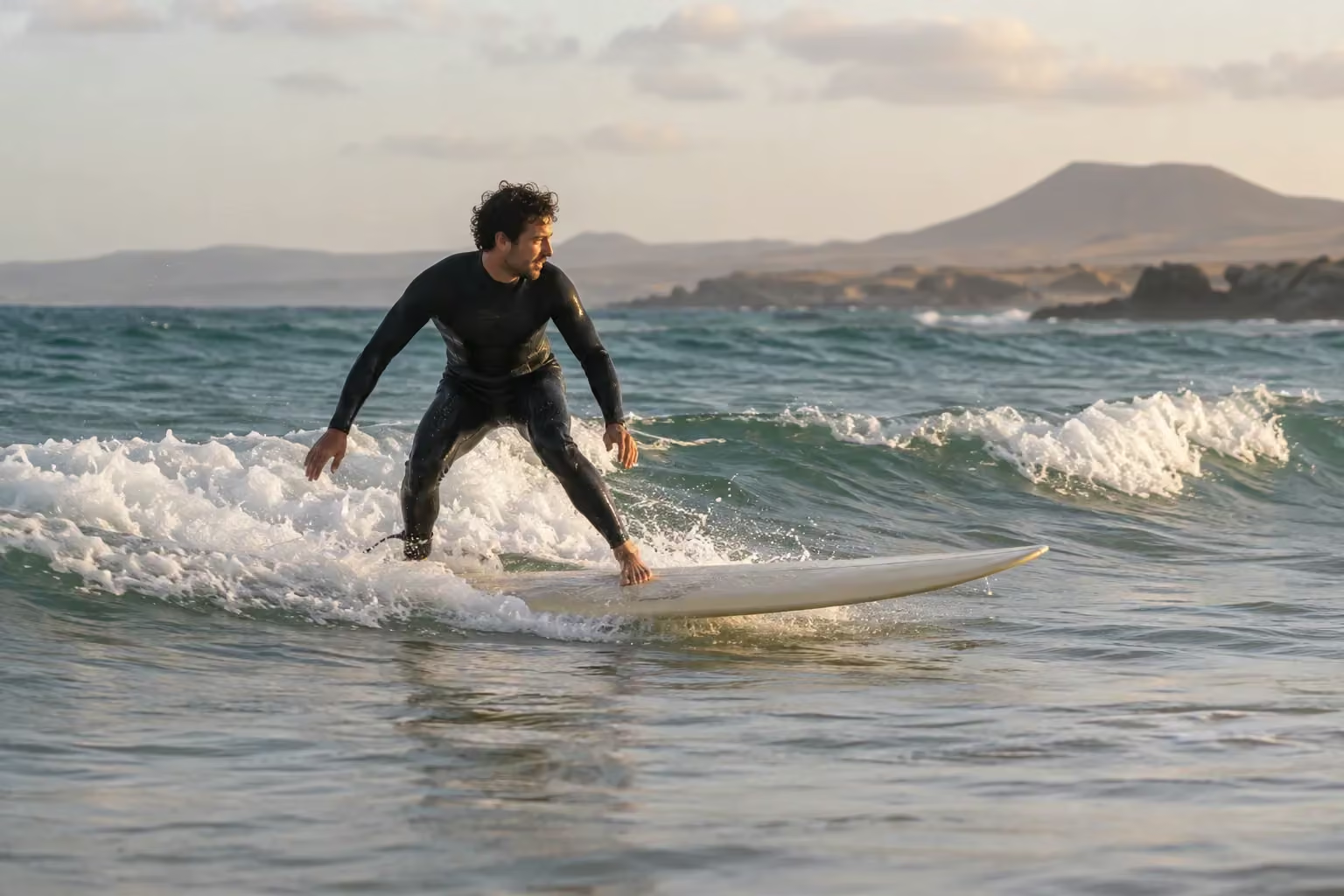
You paddle for a wave, feel your Surfboard pick up speed, and suddenly it's time: you want to stand up.
This is where the take-off comes in: the movement from lying down to standing on your surfboard.
At first, it may feel like a lot of movements at once. Don't worry: you can learn the take-off step by step, and practise much of it on land.
The right position on your surfboard
A good take-off starts while you're still lying on the board.
Your body should be centred along the board's length. Make sure the nose neither digs deeply into the water nor points high above it.
- Too far forward: the nose can dip underwater.
- Too far back: the board slows down and catching waves becomes harder.
- Balanced in the middle: your board can glide better.
Lift your upper body slightly while paddling and look ahead. This lets you watch the wave and prepare for the take-off.
Learn the take-off: stand up step by step
Three things matter in the take-off: timing, a controlled pop-up and a stable stance.
The exact technique can vary with your board, mobility and learning stage.
1. Paddle for the wave
Paddle steadily, keep the board pointing where you want to go and build enough speed.
As the wave pushes your board and you begin to glide, prepare for the take-off.
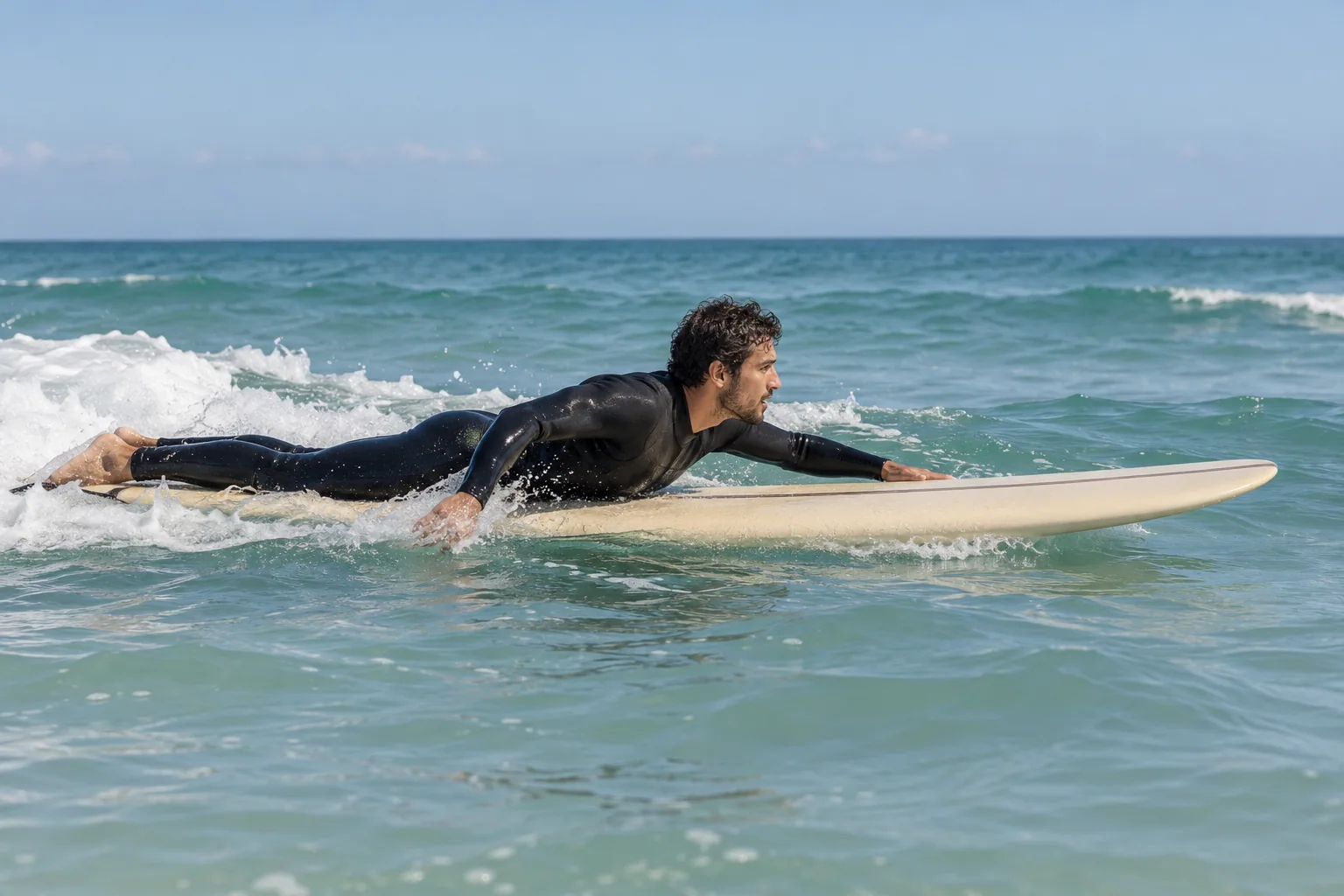
Stand too early and you may lack speed. Wait too long and the wave may become too steep.
The right timing comes mainly with practice.
2. Place your hands beside your torso
Place your hands flat on the board, roughly beside your lower ribs.
Push your upper body up to create space for bringing your legs underneath you.
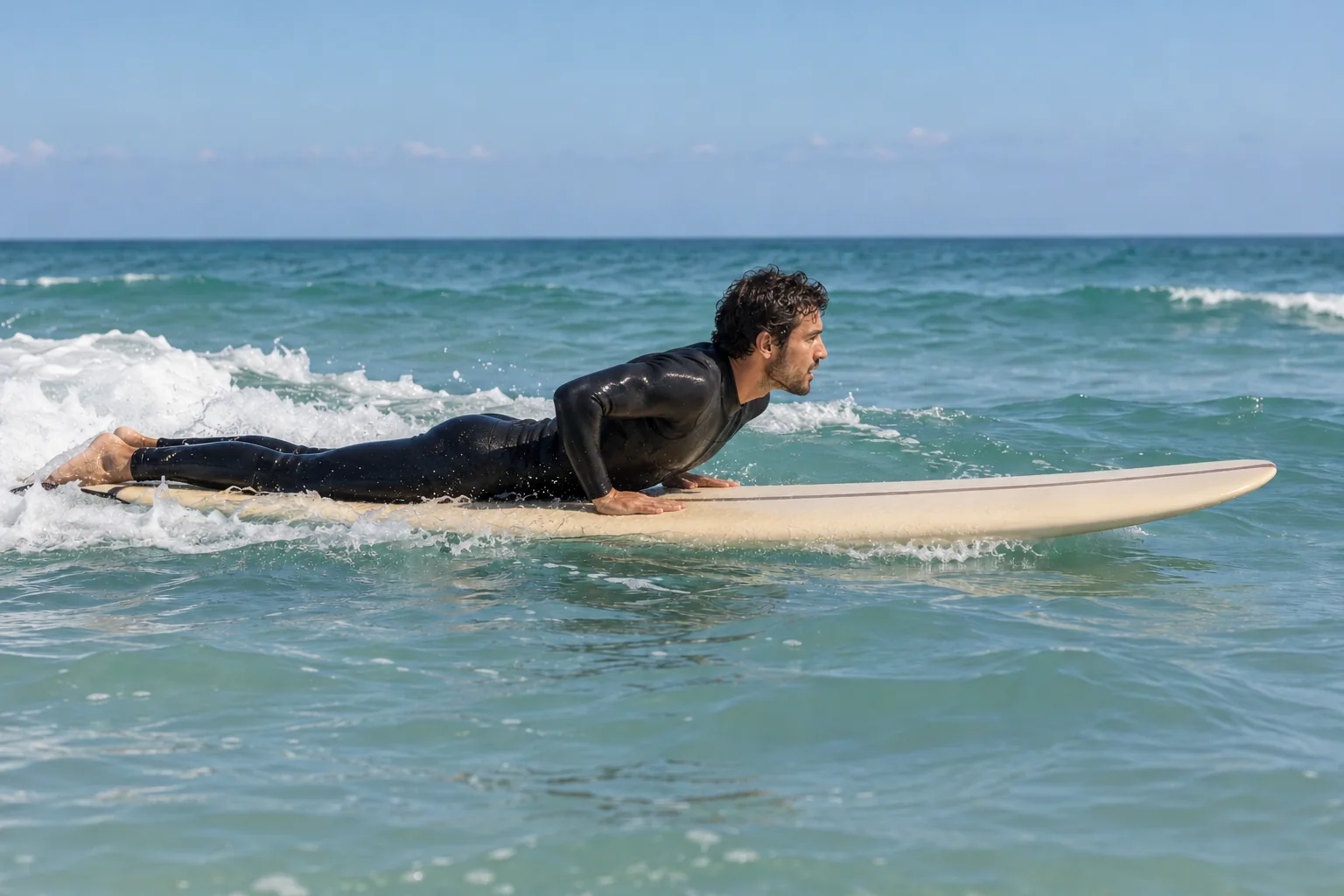
Important: don't grip the rails. This can affect your balance and make the pop-up harder.
3. Bring your feet underneath you
Now bring your feet into your surf stance.
Your front foot lands roughly between your hands; your rear foot goes further back. Both feet are across the board's length, as close to its centreline as possible.
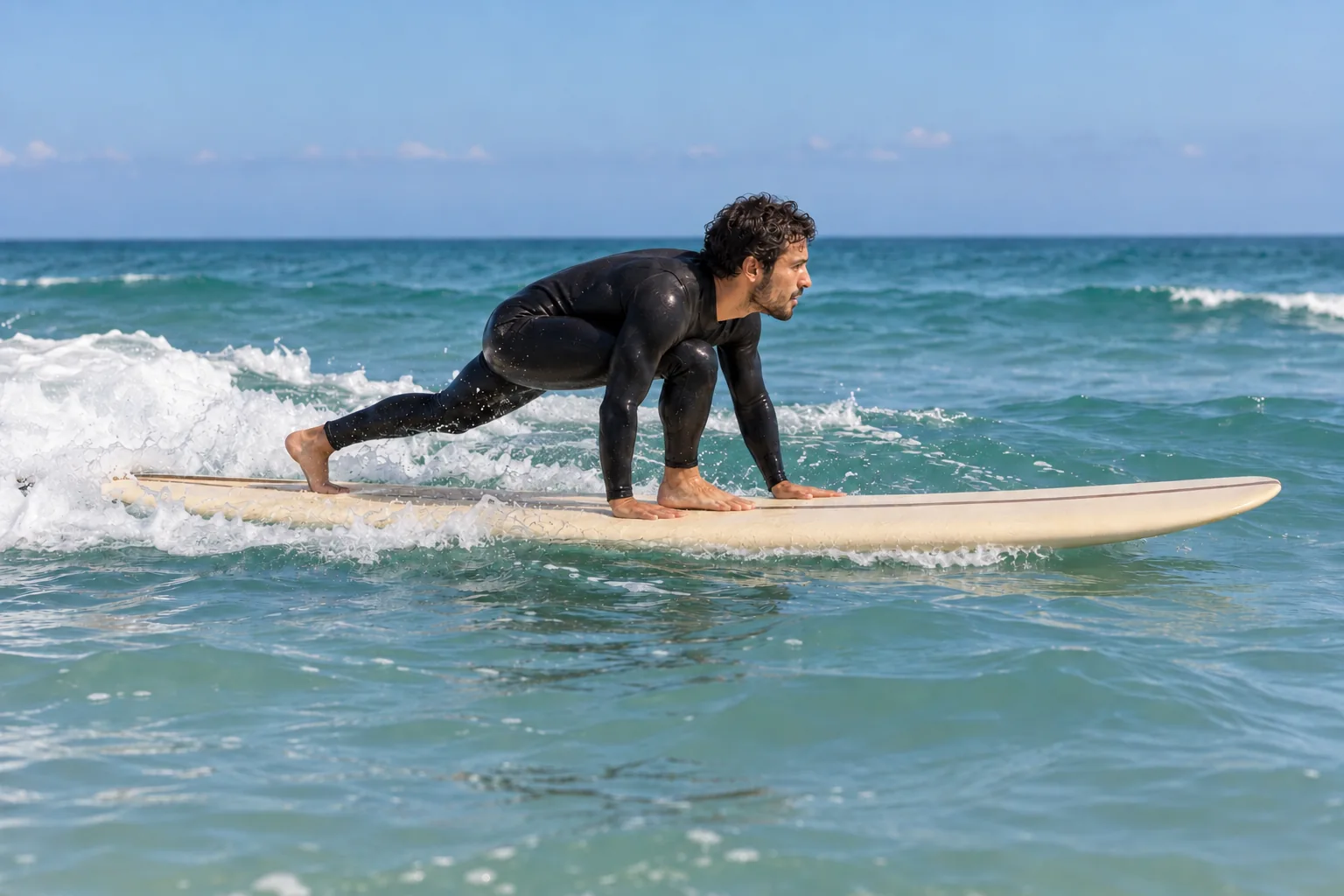
There are two stances:
- Regular: your left foot is in front.
- Goofy: your right foot is in front.
Neither is better. What matters is which feels natural to you.
You can move your feet forward in one flowing movement or use an intermediate step. Your coach helps you find the right version.
4. Stand steadily and look ahead
You did it: you're standing!
Now focus on keeping your balance:
- Bend your knees and stay relaxed.
- Keep your feet roughly shoulder-width apart.
- Keep your weight as centred over the board as possible.
- Use your arms for balance.
- Look where you want to go.
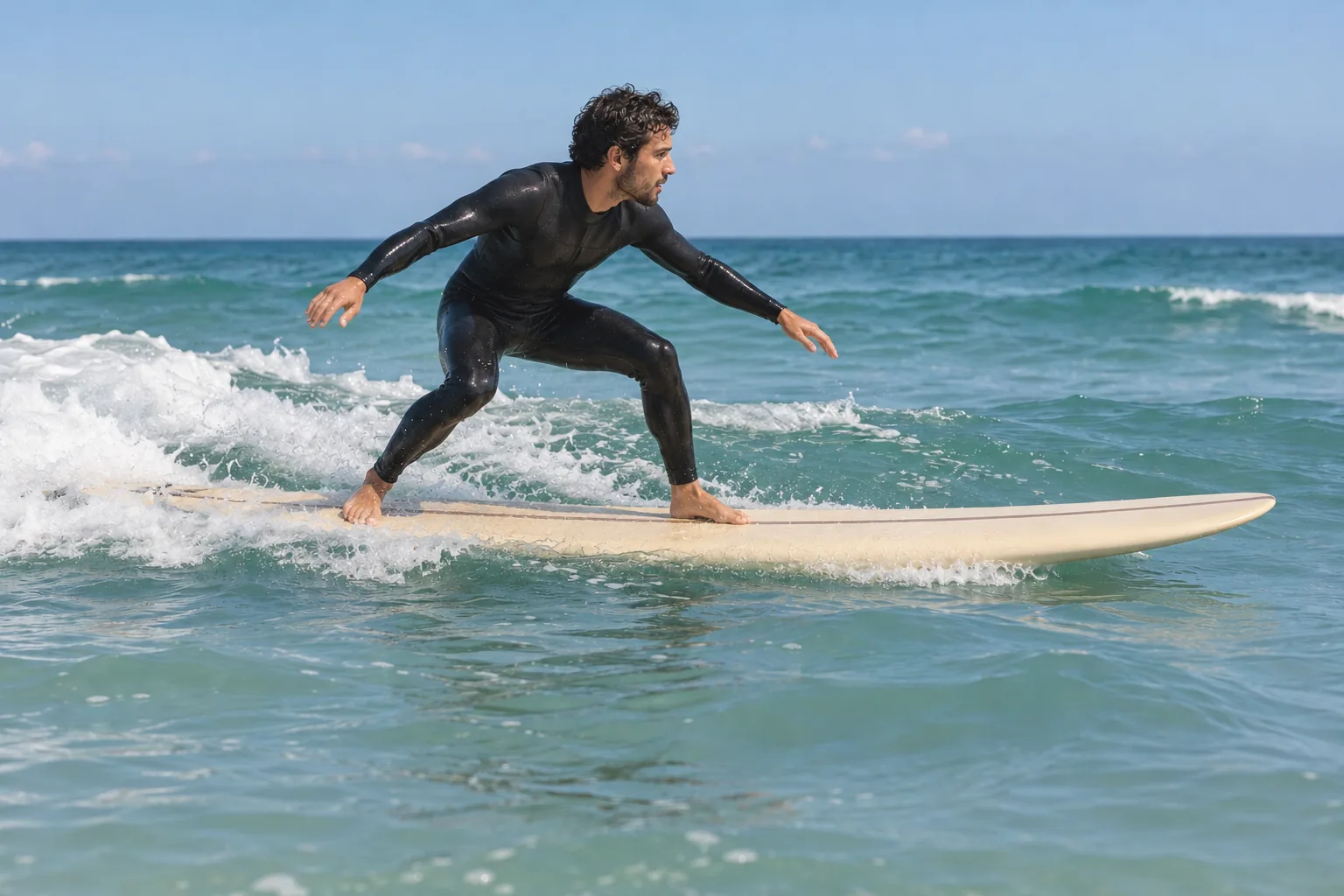
Don't try to stand completely upright straight away. Bent knees help you absorb the board's movements.
What if you stand for only a second before falling? You've already completed an important part of the take-off.
Three common take-off mistakes and how to avoid them
| Mistake | What helps |
|---|---|
| You look at your feet. | Look in your direction of travel. Practise foot placement on land beforehand. |
| You stand too upright. | Stay low and relaxed with your knees bent. |
| Your feet land off-centre or too close together. | Use the board's centreline as a guide and keep a stable distance between your feet. |
Our tip: don't try to correct every mistake at once. On your next wave, focus on just one thing.
Practise the take-off on land
You don't need a wave to improve your pop-up.
Practise on a flat, soft surface. If using a surfboard, make sure it rests securely without putting weight on the fins. You can also practise without a board.
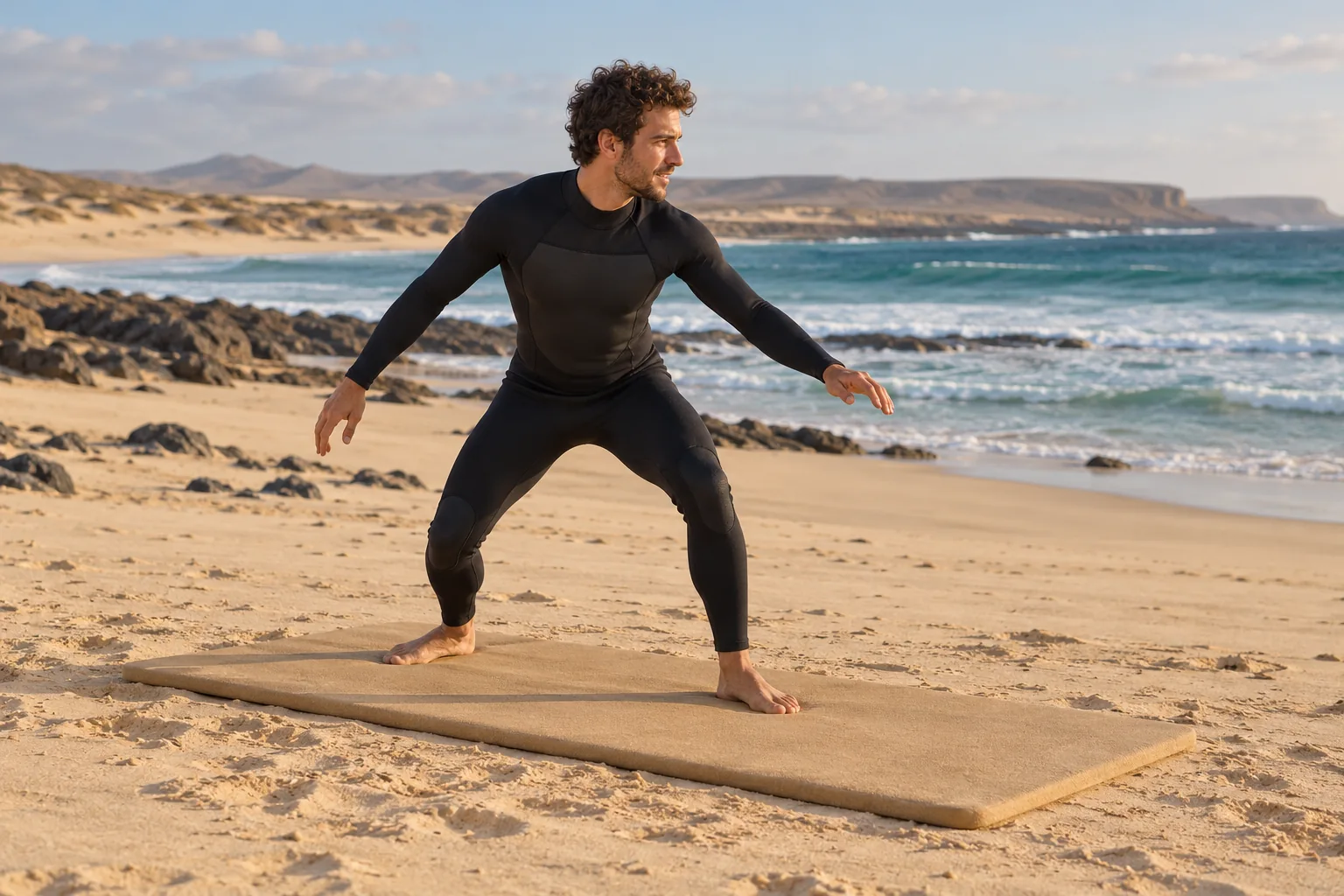
Practising on land helps you focus more on the wave and timing when you're in the water.
Here's how:
- Lie in your paddling position.
- Place your hands beside your torso.
- Push up and bring your feet underneath you.
- Stay standing with bent knees and look ahead.
Repeat slowly at first. Once you know where your hands and feet go, connect the movements more fluidly.
Choose control over rushing. A quick jump helps little if you lose your balance immediately afterwards.
In the water, practise in suitable conditions, such as small whitewater waves with guidance.
What if the take-off isn't working?
You may land on your knees at first. You may stand briefly and fall straight back in. Or place your feet correctly but then lose balance.
That is part of learning to surf .
After an attempt, briefly think about what might have happened:
- The board isn't gliding properly? Check your lying position and timing.
- Can't bring your front foot forward? Practise the movement slowly on land.
- Falling as soon as you stand? Check bent knees, foot placement and where you're looking.
Try to change only one thing on your next attempt. That makes it easier to notice what actually helps.
Frequently asked questions about the take-off
What is a take-off in surfing?
The take-off is the movement from lying to standing on a surfboard. It begins once you catch the wave and the board starts gliding.
When should I stand up while surfing?
When the wave pushes your board enough and it glides steadily, it's time for the take-off. Exact timing depends on the wave and your speed.
Do I have to jump up with both feet at once?
No. You can bring your feet into place using an intermediate step. What matters is controlled movement that suits your mobility and learning stage.
Which foot goes in front when surfing?
Regular means left foot in front; goofy means right foot in front. Both stances are equally valid. Choose the one in which you feel more stable.
How can I improve my take-off?
Practise regularly on land. Focus on hand and foot placement, bent knees and looking where you're going. In the water, correct just one mistake per attempt.
Your take-off feels more familiar with every wave
At first, many movements must fit together at once, on a board that keeps moving.
Each repetition makes the sequence more familiar. Eventually, you no longer have to think about every movement of your hands and feet.
You feel the wave push your board, bring your feet underneath you and stand.
Maybe just for a moment. Maybe for a whole whitewater wave.
And that feeling makes you want to try again.
Your next take-off with a clear focus
Want to work on your take-off and know what to focus on next wave? Julian looks at timing, movement and stance with you. Tell him what already works and where you would like support.