
Learn to Read Waves: What Shape, Direction and Movement Tell You

ai generated
You stand on the beach looking out to sea. Some waves break gently, others steeply and quickly. Some peel evenly to the side; others break almost all at once across their width.
At first, this may look random. But when you look more closely, patterns appear.
Learning to read waves means observing their shape, direction and movement. This helps you assess which waves suit your ability, where to position yourself and when it's time for your Take-off .
Best of all, you can start before you even enter the water.
1. Wave shape: how does a wave break?
A wave's shape tells you how quickly and powerfully it breaks. You should be able to distinguish three types.
ai generated
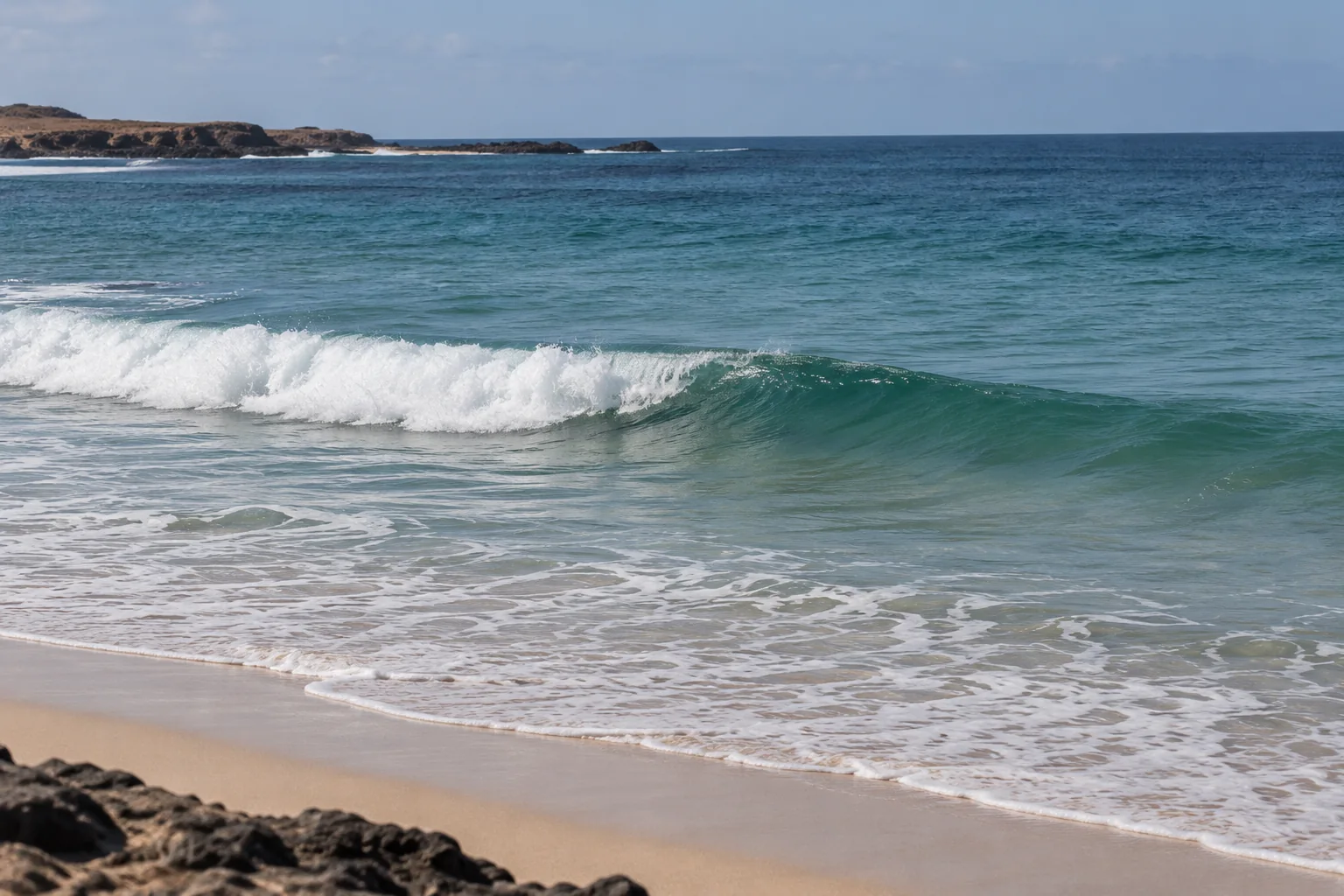
Gently breaking waves
Foam gradually spills down the front. Small, gently breaking waves can suit beginners. In the whitewater, you can first practise feeling the wave push your board.
ai generated
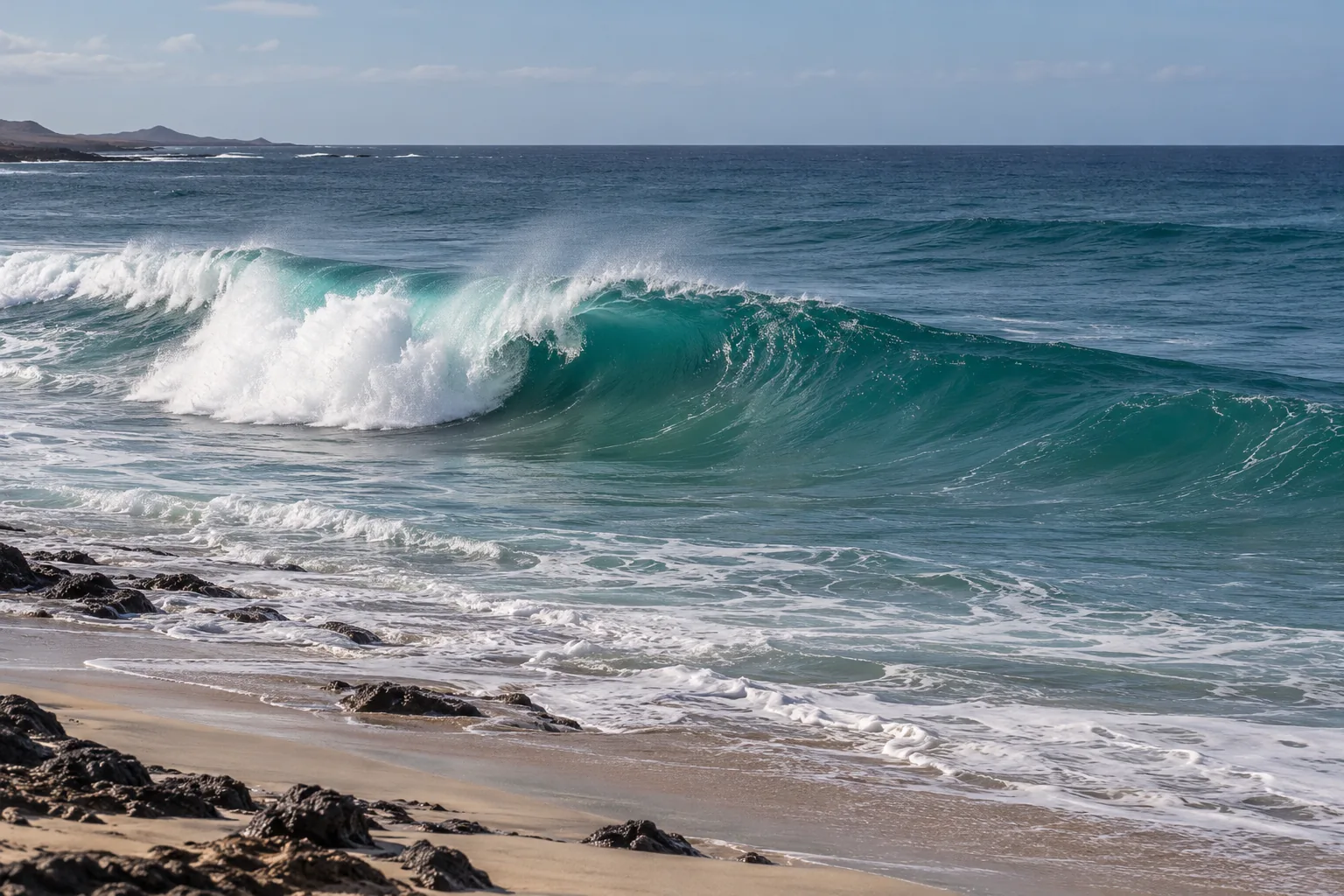
Steeply breaking waves
The upper part of the wave, called the lip, pitches forward. These waves require more experience and can be dangerous, particularly in shallow water.
ai generated
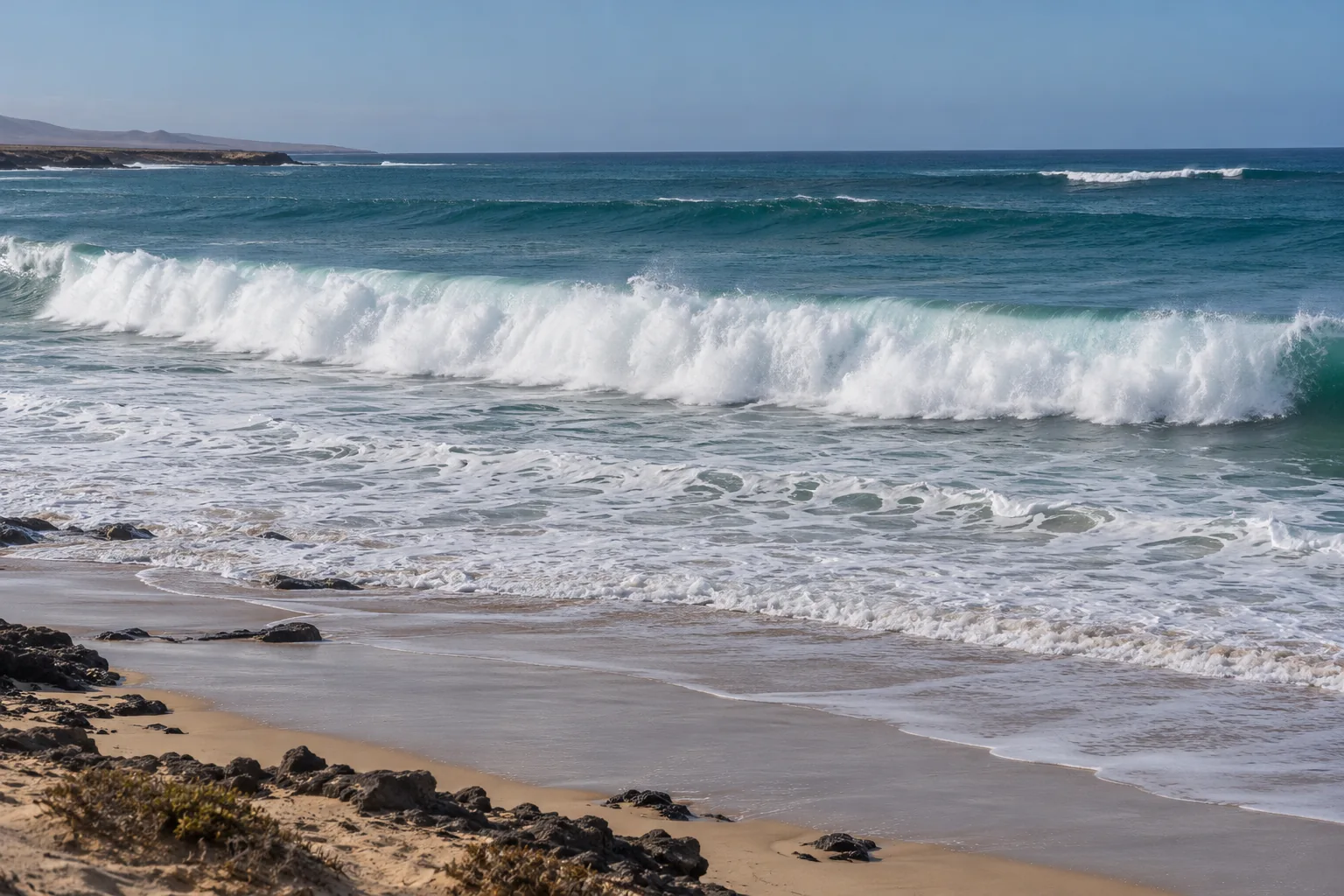
Closeouts
The wave breaks almost simultaneously across its width, leaving little open face to ride along. Under suitable conditions, the resulting whitewater can still be used for practice.
Remember: a small wave isn't automatically easy. How steeply it breaks and the water depth beneath it matter too.
2. Wave direction: left, right or closeout?
Some waves start breaking at one point, then peel to the left or right.
Beside the breaking section, an open face remains. You can surf sideways along it.
The main distinctions are:
- Left: the wave peels left from the surfer's perspective.
- Right: the wave peels right from the surfer's perspective.
- Closeout: the wave breaks almost simultaneously across its full width.
Important: direction is always described from the perspective of a surfer looking towards the beach. From the beach, left and right are therefore reversed.
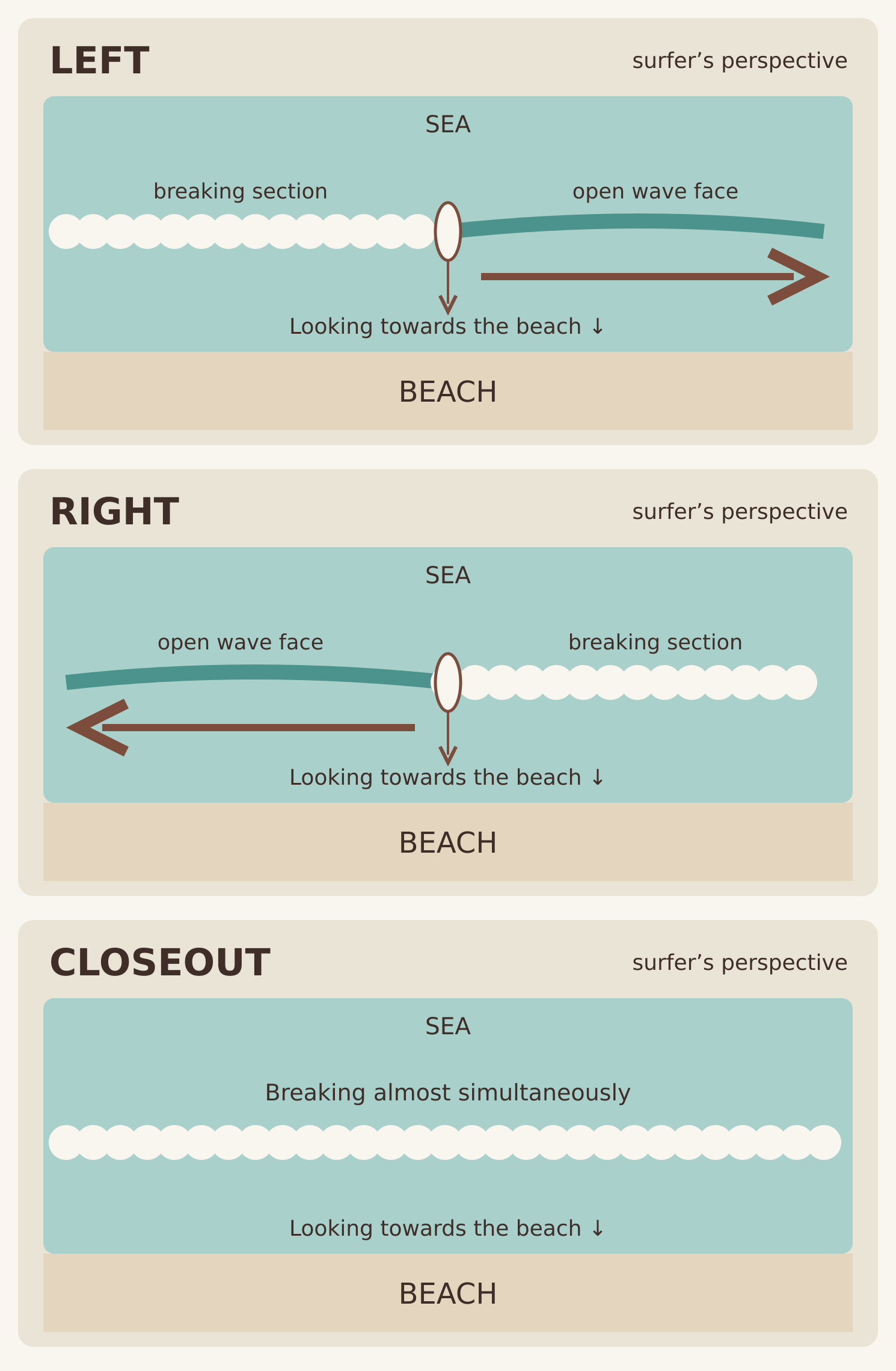
Simplified overhead view from the sea towards the beach: arrows show the surfing direction along the open face. Labels use the surfer's perspective.
Observation tip: follow a wave from its first break to the end. Does an open face remain beside it? Which way does it peel?
3. Recognising sets: when do the next waves arrive?
Waves often arrive in groups. These groups are called sets.
Several larger waves may arrive one after another, followed by a quieter period before the next group.

ai generated
Watch several sets, rather than just one wave:
- Roughly how many waves arrive in a row?
- How long are the quieter periods?
- Where do the larger waves break?
- Does the breaking point change?
This helps you develop a better feel for the sea's rhythm.
Be careful, though: calm-looking water doesn't mean the next waves will remain as small.
4. Why do waves break in different places?
As waves enter shallower water, they slow down, become steeper and may eventually break.
How and where this happens depends especially on the seabed.
At a sandy beach break, sandbanks can make waves break earlier in certain places.
At reefs and rocky coasts, fixed underwater structures influence wave shape.
The tides also change conditions. A spot may break very differently at low water than at high water.
Never look only at height when reading waves. Two equally high waves can surf completely differently.
5. What does the wind tell you?
Wind can smooth waves, make them choppier or change their shape.
| Wind direction | Typical effect |
|---|---|
| Offshore – From land to sea | Can smooth waves and preserve their shape longer. Strong offshore wind can make paddling into waves harder. |
| Onshore – From sea to land | Often makes waves choppier and less organised. |
| Sideshore – Parallel to the coast | Can affect waves and current patterns. |
Offshore doesn't automatically mean good or safe surf conditions.
Wind, swell, tides and seabed work together to determine how waves actually break.
6. Practise reading waves: your beach check
You don't need complicated measuring equipment. Before your next session, take a few minutes to observe the sea carefully.
Your wave check
0 of 6 checked
At first, discuss your observations with your surf coach. This helps you learn which waves suit your ability and which details you may have missed.
Reading waves also means recognising hazards
A wave may look beautiful from the beach and still be unsuitable for you.
Pay particular attention to possible rip currents. They can pull you away from the beach.
Signs may include foam moving out to sea, unusually choppy areas or apparently calm gaps between breaking waves. These currents aren't always easy to recognise, though.
Rocks, shallow reefs, powerful shorebreak and other people in the water also form part of your assessment.
Important: if you don't know a spot or can't confidently assess conditions, don't enter alone. Ask a qualified surf coach or local lifeguard to explain the suitable practice area and possible hazards.
Frequently asked questions about reading waves
How do I recognise a good beginner wave?
Small, gently breaking waves in a safe practice area often suit beginners. Alongside wave shape, water depth, currents and your ability are crucial.
What does closeout mean in surfing?
A closeout is a wave that breaks almost simultaneously across its full width, leaving little open face to ride sideways along.
What is a set in surfing?
A set is a group of consecutive waves. There are often quieter periods between sets. Wave size and spacing can vary.
How do I tell whether a wave breaks left or right?
Watch where the wave first breaks and which way the breaking section moves. Surfing direction is always described from the perspective of a surfer looking towards the beach.
Can I learn to read waves without surfing?
Yes. You can observe wave shape, breaking direction, sets and wind from the beach. It helps you understand the sea's movements better.
The better you read waves, the more consciously you surf
At first, you may simply see waves rolling towards the beach.
Over time, you recognise where they first break, which form an open face and when the next set arrives.
You learn to choose more deliberately instead of paddling for every wave.
And sometimes, the best decision is to let a wave go.
Reading waves takes practice. But you can learn at every session, even on days when you simply sit on the beach watching the sea.
Read the waves with Julian
Want to make better sense of your observations from the beach? Look at the conditions with Julian and discuss which practice area suits your ability. Then begin your next session with a clear focus.